

Internal Communications Blog

Our Most Recent Internal Comms Research
Beyond Open Rate: The Internal Comms Metrics Leaders Care About
Go beyond open rates to measure what truly matters in internal communications. Learn how to track reach, engagement, action, and real business impact.
Internal Email Communication
Accessibility for Internal Comms: What WCAG Pressure Means This Year
Accessibility for internal comms is now a practical compliance and workflow issue. Learn what WCAG pressure means this year, what to fix first, and why inbox tools break at scale.
Distribution Lists vs Segmentation: Why “All Employees” Is Killing Relevance
Distribution lists vs segmentation is the difference between noisy internal emails and relevant communication. Learn why “All Employees” reduces trust, what Gmail and Outlook miss, and how to fix targeting with better internal comms workflows.
.avif)
How to Create and Send a Better Employee Survey in Outlook
This article explains how to create surveys in Outlook. While surveys involve feedback, the execution is email-based. The problem centers on using email tools effectively. It aligns with email-centric solutions.

10 Best Free Internal Communications Email Software for 2026
Internal email is still the default channel, but most teams struggle with low engagement and inbox overload. This article reviews free internal email tools using clear criteria: ease of creation, segmentation, delivery controls, and analytics. The takeaway: choose a free tool that supports targeting and measurement, not just hitting send.
Internal Communication Strategy
Beyond Open Rate: The Internal Comms Metrics Leaders Care About
Go beyond open rates to measure what truly matters in internal communications. Learn how to track reach, engagement, action, and real business impact.
Q1 Internal Comms Report Template: What to Measure Beyond Opens
Use this Q1 internal comms report template to measure what matters beyond opens. Learn which metrics build credibility, save reporting time, and help leaders understand communication impact.
Inclusive Sends: Why “Send to All Employees” Fails in Gmail and Outlook
“All Employees” sounds simple until Gmail and Outlook limits, messy lists, and BCC risks start excluding people. Learn how to make inclusive sends more reliable, targeted, and repeatable.
Quarterly Reporting for Comms: A Scorecard You Can Defend in 15 Minutes
Quarterly reporting for comms doesn’t need to be a slide marathon. Use this 15-minute scorecard to stop guessing, prove reach and impact, and show what to do next—powered by Foundations and Broadcast Insights.
Internal Communications Measurement
Quarterly Reporting for Comms: A Scorecard You Can Defend in 15 Minutes
Quarterly reporting for comms doesn’t need to be a slide marathon. Use this 15-minute scorecard to stop guessing, prove reach and impact, and show what to do next—powered by Foundations and Broadcast Insights.
HR tax season communications: Make critical messages unmissable (and prove it with analytics)
HR tax season communications fail when you can’t prove who saw what. Learn how to make critical HR messages unmissable with Foundations, then validate performance with Broadcast Insights analytics.
Stop Guessing: The Internal Comms Metrics That Actually Matter
This article explains internal comms metrics that matter in a way internal communications managers can apply quickly. It frames the core concepts, common pitfalls, and practical best practices. Use it to align stakeholders, improve clarity, and strengthen your communication program. It's primarily strategy and education, not tool-specific execution.

Gmail Analytics: How to Track and Analyze Email Traffic and CTR
This article provides tactical guidance for tracking Gmail traffic and click-through rates. It is focused on email performance measurement. The problem is internal email optimization. The solution remains email-focused.
Employee Engagement & Experience
Run a Wellbeing Series Without Five Different All Staff Emails
Learn how to run a coordinated employee wellbeing campaign using segmentation, scheduling, and consistent messaging—without relying on multiple all-staff emails or messy spreadsheets.
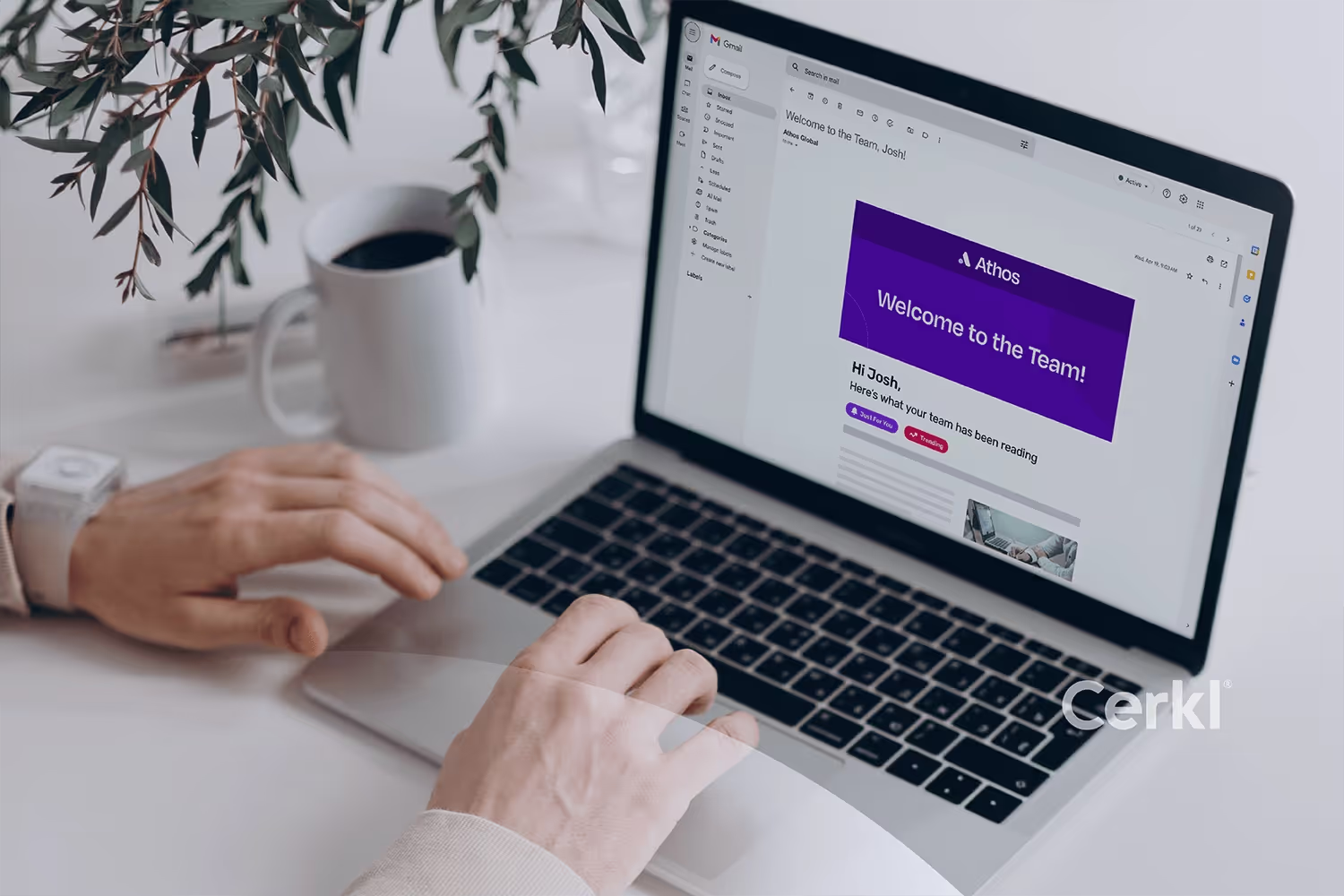
20 Best Welcome to the Team Messages to Engage New Employees
A good welcome message is the first real internal communication a new hire experiences, so it sets the tone for trust and belonging. This article explains why sincere welcomes improve well-being and retention, then shares practical best practices. It provides 20 ready-to-use examples for managers and peers. The takeaway: personalize early onboarding communication so new hires feel seen and supported.

12 Tips on How to Effectively Communicate Culture in the Workplace
Culture is communicated whether you plan it or not. This article shares practical ways to communicate culture consistently, from storytelling and recognition to leadership behavior and two-way feedback. It helps internal comms teams turn abstract values into repeatable signals employees notice. The takeaway: culture sticks when messages match lived reality.
.avif)
Employee Segmentation: The Key to Unlocking Workforce Engagement
This article expands on segmentation as a strategy for improving workforce engagement. It discusses personalization across employee touchpoints. The challenge involves coordinated targeting beyond email. It aligns with omni-channel orchestration.
Frontline & Mobile Workforce Communication
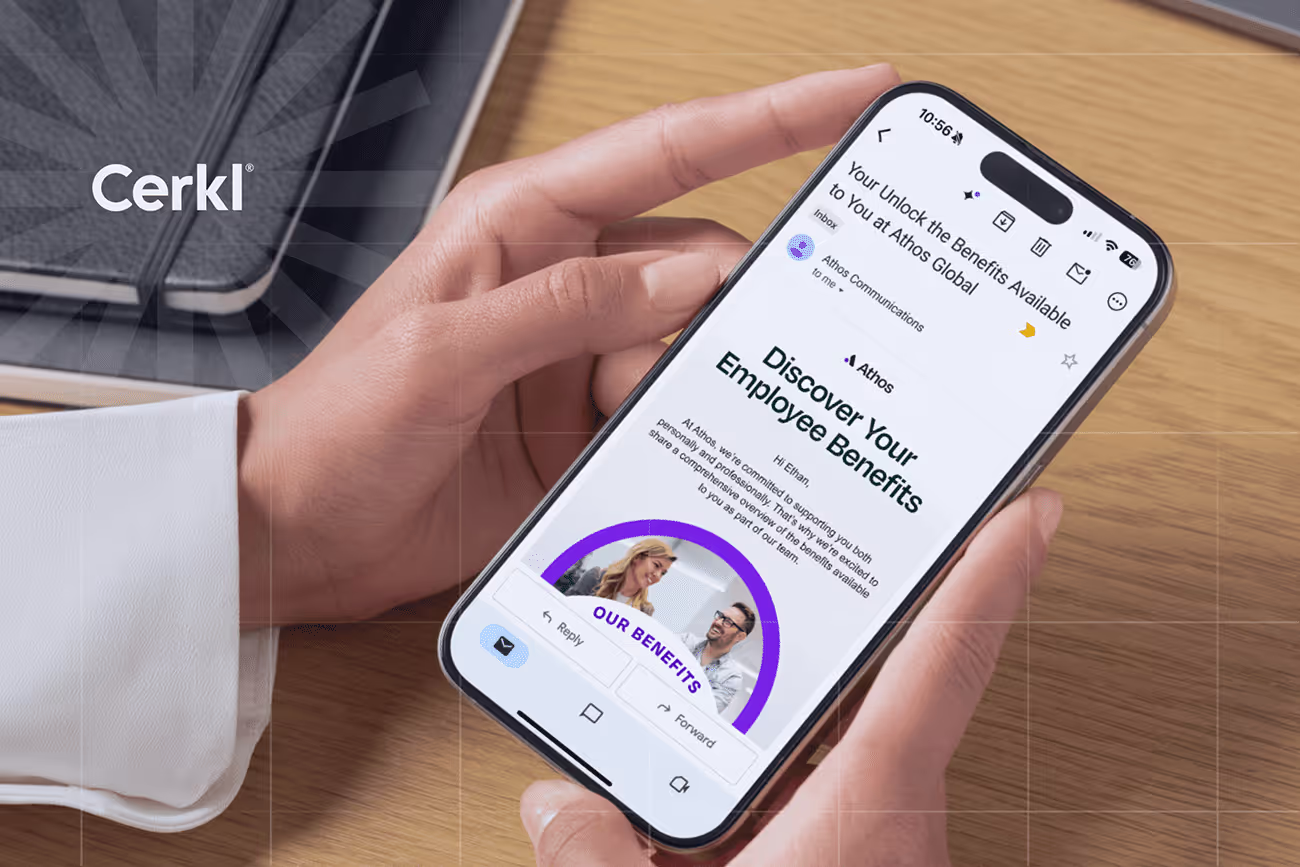
How to Create Mobile-Friendly Email Designs for Employees
This article discusses optimizing internal emails for mobile viewing. It focuses specifically on email formatting and responsiveness. The challenge centers on email usability. It aligns with email execution optimization.
Scaling Deskless Comms with AI-Driven Content Distribution
This article focuses on ai content distribution as an internal email execution problem. It highlights practical tactics to improve deliverability, engagement, and consistency. Use it to standardize your approach, reduce manual work, and get better results from employee email. Ideal for teams relying on Gmail or Outlook as the primary channel.

Personalized Communication Solutions for Healthcare’s Deskless Workforce
This article covers personalized internal communication healthcare in the context of broader employee communication systems. It emphasizes coordinating messaging across channels, audiences, and governance needs. Use it to reduce fragmentation, improve reach to different worker types, and measure impact across touchpoints. Best fit when email is not the only channel that matters.
Closing the Campus Communication Gap and Engaging Deskless Workers
This article focuses on communication challenges for deskless workers in higher education. It addresses mobile access and non-email channels. Because the audience does not rely primarily on email, the solution requires multi-channel delivery. It aligns with omni-channel orchestration.